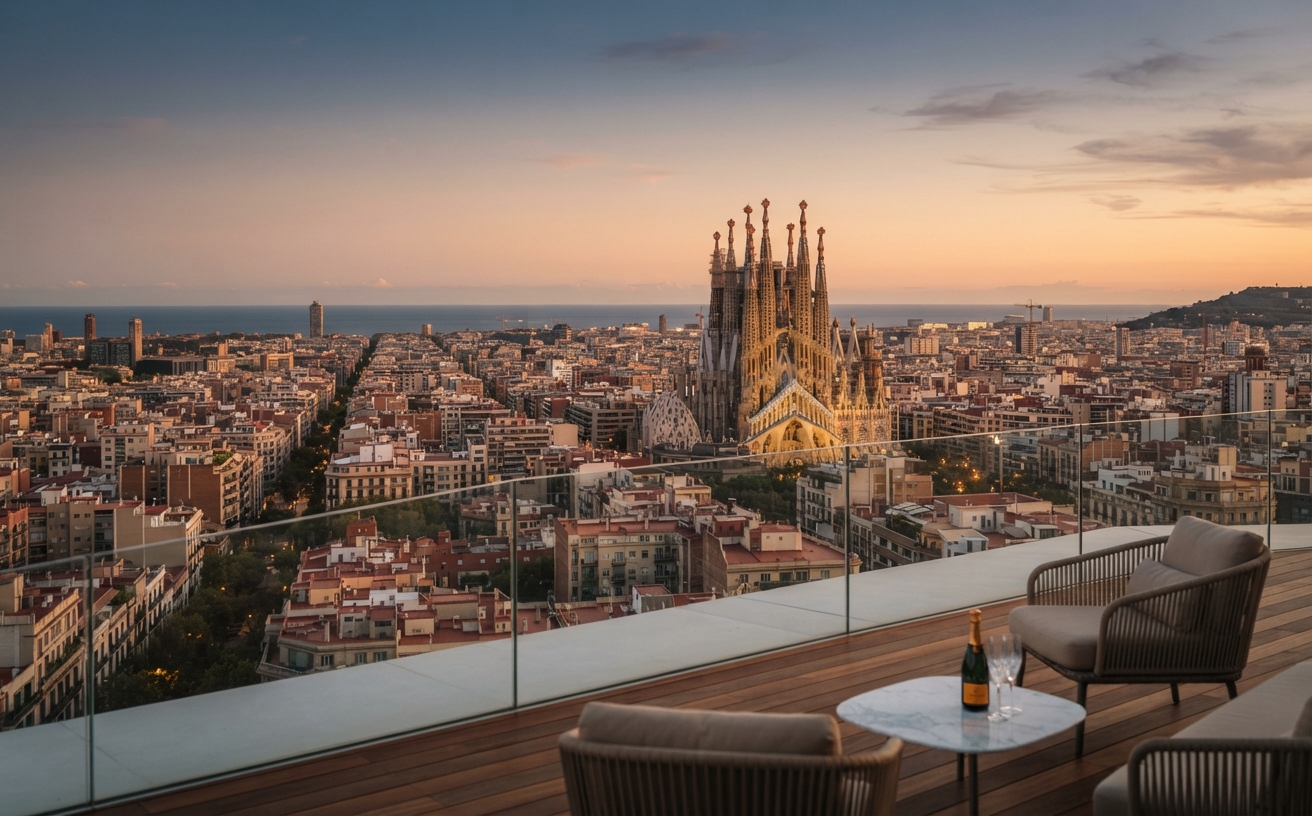
Barcelona, Spain's second city, mixes Gaudí's modernist landmarks, the medieval Gothic Quarter and a long Mediterranean seafront. Its Jewish life is small and spread across three areas: the Chabad House of Barcelona on Carrer del Montnegre in Les Corts, with daily Shacharit, Friday-night and Shabbat-morning services and large communal Shabbat dinners for visitors; the synagogue of the Comunidad Israelita de Barcelona on Carrer de l'Avenir in Sant Gervasi–Galvany; and Centro Bet David in the Gothic Quarter.
Kosher food is limited. Taim Barcelona in Les Corts, under Chabad supervision, is the one full kosher restaurant, with takeaway and delivery; El Falafel de Shani sells vegan falafel in La Boqueria market. For groceries there are Ben Ben and Kosher Babait in Sant Gervasi–Galvany and Chabad's Call Bcn Kosher Wine shop in the Gothic Quarter.
There is no eruv in Barcelona. Shabbat-observant visitors usually base themselves in Les Corts, where several hotels on and around Avinguda Diagonal are a few minutes' walk from the Chabad House and Taim.
The Chabad House in Les Corts, run by Rabbi Dovid Menachem Mendel and Nechama Dina Libersohn since 1999, has a synagogue with daily Shacharit, Shabbat and holiday meals for visitors by advance registration, a visitor information desk with Wi-Fi and a coffee corner, and Torah classes in Spanish. It also runs the women's mikveh on Carrer de Bordeus (by appointment) and the Call Barcelona Judaica and kosher wine shop in the Gothic Quarter.
TMB runs the metro and city buses, and trams also serve the Avinguda Diagonal corridor.
A single ticket costs €2.90 and is valid on metro, bus and the Montjuïc funicular; the T-casual card gives 10 journeys for €13, and the Hola Barcelona travel card starts at €12.50 and includes return metro trips to the airport. The city works well without a car, and Les Corts, where the Chabad House and Taim are, is connected to the centre by metro and bus.
Rideshare
Taxis are plentiful and can be hailed on the street or booked by phone, and the Cabify app operates in the city.
Car rental
Car rental companies have desks at Josep Tarradellas Barcelona–El Prat airport.
A car is not needed inside the city: parking is scarce and expensive, and public transport and walking cover the areas with kosher food and shuls.
Airport
Josep Tarradellas Barcelona–El Prat airport (BCN) is the city's airport. Metro line L9 Sud serves both terminals (airport ticket €5.90), the Aerobús express bus runs from Terminal 1 to Plaça de Catalunya, and a taxi to the La Rambla area costs about €35. From Plaça de Catalunya, the metro and buses continue to Les Corts and the Chabad House.
Good to know
Best time to visit
Spring (April to June) and early autumn (September to October) are warm without the peak heat and crowds of July and August. Winters are mild, and most sights stay open year-round with shorter winter hours.
Insider tips
Most hotels use electronic room keys. Kosher shops close on Friday afternoon and Taim closes at 3:00 PM on Friday, and all reopen on Sunday, so plan Shabbat food in advance or reserve a place at the Chabad Shabbat dinner. Carrying on Shabbat is not possible because the city has no eruv. Pickpocketing is common on La Rambla and on the metro, so keep bags closed.
Safety & emergency
Barcelona is generally safe, but pickpocketing is common on La Rambla, in the Gothic Quarter, on the metro and at busy sights, so keep bags closed and phones out of reach.
Ambulance: 061
Police (Mossos d'Esquadra): 088
Fire brigade: 080
Plug
Type C/F
230V
Currency
Euro
Kosher map of Barcelona
Pick a place on the map or search an address or hotel to see what is kosher around it.
Frequently asked about Barcelona
Do I need a visa to visit Barcelona?
Spain is in the European Union and the Schengen Area. Visitors need a passport valid for their whole stay; citizens of the United States, the United Kingdom, Canada, Israel and many other countries can visit without a visa for up to 90 days in any 180-day period, while others need a Schengen visa before travelling.
How do I get from the airport to the city?
Josep Tarradellas Barcelona–El Prat airport is about 15 km from the centre. Metro line L9 Sud serves both terminals with an airport ticket costing €5.90, the Aerobús express bus runs to Plaça de Catalunya, and a taxi to the La Rambla area costs about €35.
Do I need a car in Barcelona?
No. The metro, buses and trams cover the city, a single ticket costs €2.90 and a 10-journey T-casual card €13. Parking is scarce and expensive, and the Chabad House, Taim and the hotels around it in Les Corts are all within walking distance of one another.
Where are the synagogues?
The Chabad House of Barcelona is at Carrer del Montnegre 14 in Les Corts, with Shacharit at 7:30 AM Monday to Friday and 8:30 AM on Sundays, and Friday-night and Shabbat-morning services. The Comunidad Israelita de Barcelona synagogue is at Carrer de l'Avenir 24 in Sant Gervasi–Galvany, and Centro Bet David is in the Gothic Quarter at Plaça de Ramon Berenguer el Gran 2.
Is there an eruv in Barcelona?
No. There is no eruv anywhere in Barcelona, so carrying outdoors on Shabbat, including keys and strollers, is not permitted.
Where can I eat Shabbat meals?
Chabad of Barcelona holds a communal Shabbat dinner every Friday night at the Chabad House on Carrer del Montnegre, attended by local families and visitors from around the world. Places must be reserved in advance through its registration page, which closes early on Friday. Taim Barcelona also sells dishes for pickup if ordered by 2:00 PM the day before.
Where can I find kosher food?
Taim Barcelona, at Carrer del Taquígraf Garriga 87 in Les Corts, is a glatt kosher meat restaurant under Chabad supervision with takeaway and delivery. El Falafel de Shani sells vegan falafel at stalls 133–134 in La Boqueria market. Ben Ben (Carrer d'Aribau 257) and Kosher Babait (Carrer de l'Avenir 22) are kosher groceries with meat, and Call Bcn Kosher Wine in the Gothic Quarter sells kosher wine and basic products.
Which area is best to stay in?
For Shabbat, Les Corts is the most practical base: NH Collection Barcelona Constanza, the Derby Hotel, Meliá Barcelona Sarrià and Hilton Barcelona are all within walking distance of the Chabad House and Taim, and the Atenea Barcelona Aparthotel offers apartments nearby. The Gothic Quarter is central for sightseeing but far from the Chabad House on foot.
Is there a mikveh in Barcelona?
Yes. Chabad of Barcelona runs a women's mikveh at Carrer de Bordeus 25, next to the Chabad House in Les Corts. Visits are by appointment only, arranged in advance with Rebbetzin Nechama Libersohn on +34 607 922 805.
What is open on Shabbat?
The kosher restaurant and shops close on Shabbat: Taim closes at 3:00 PM on Friday, and Ben Ben, Kosher Babait and Call Bcn Kosher Wine close at 2:00 PM on Friday and reopen on Sunday. Most of the city, including museums, shops and Gaudí sites, stays open on Saturday.
Can I buy kosher products in ordinary supermarkets?
Yes. Chabad of Barcelona publishes the Kosher App Spain, which lets shoppers scan a product's barcode to see whether it is on its list of kosher products sold in regular Spanish supermarkets.
Is there Jewish heritage to see?
The Call, the medieval Jewish quarter in the Gothic Quarter, has the Sinagoga Mayor de Barcelona on Carrer de Marlet, a medieval synagogue building open as a museum space. Chabad's Call Bcn Kosher Wine shop and Centro Bet David are a few minutes' walk away.
What currency, plugs and phone code does Spain use?
Spain uses the euro (EUR). Electricity is 230V with Type C and F plugs, the same as most of continental Europe. The country calling code is +34.
All kosher listings in Barcelona
Kosher restaurants, bakeries and groceries in Barcelona (5)