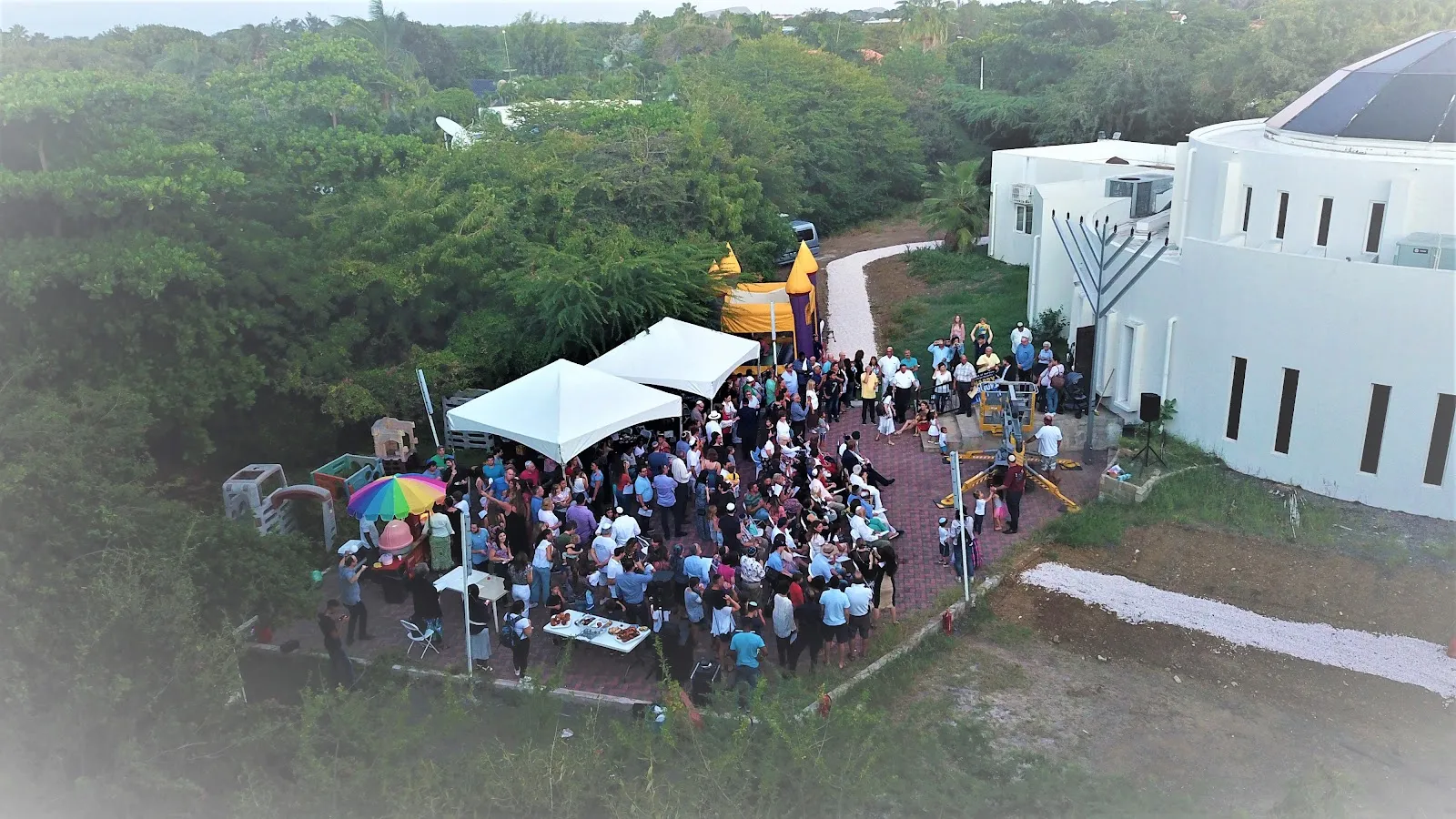
Weekly Friday night dinner and Shabbos hospitality
Magdalenaweg 37, Willemstad, Curaçao

Caribbean
Kosher Guide to Curacao
City overview
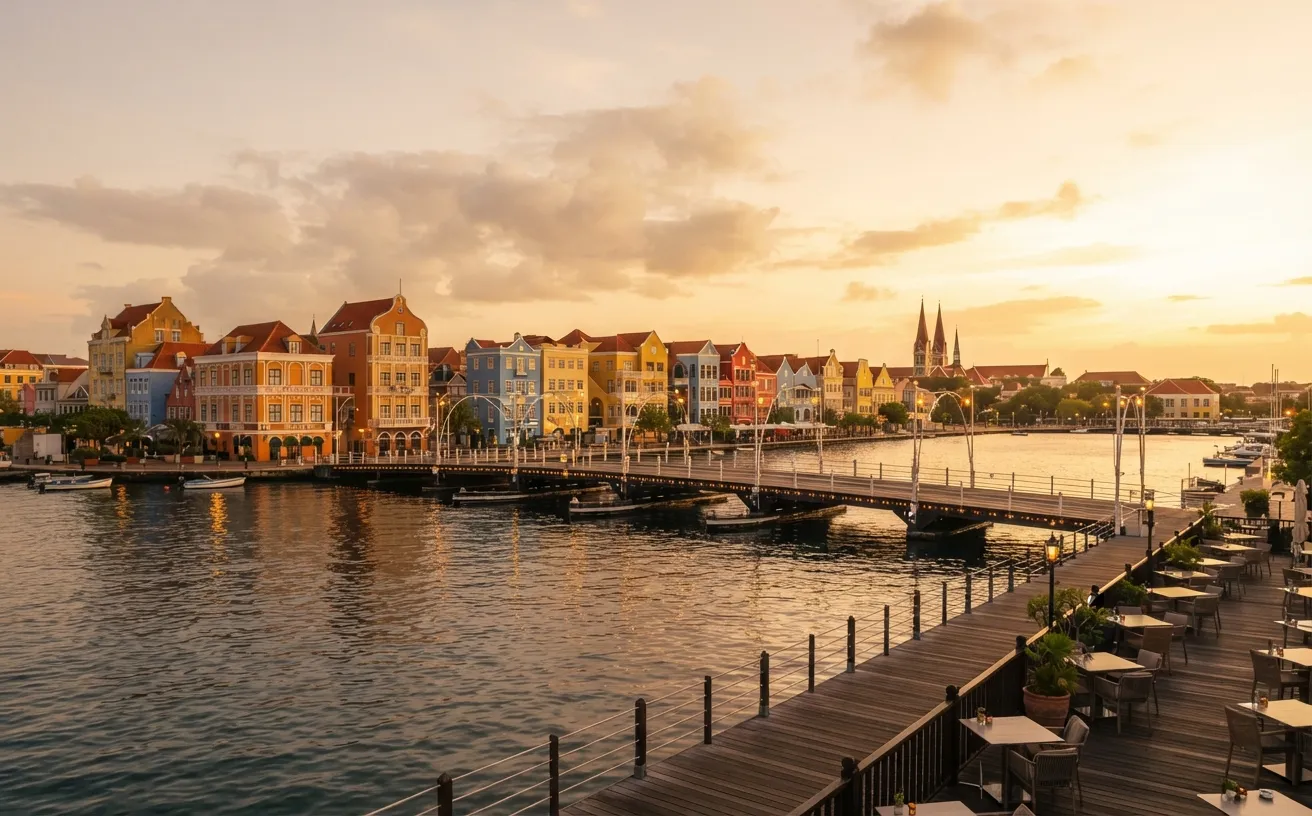
Curaçao is a Dutch Caribbean island 40 miles off the Venezuelan coast, where pastel-coloured colonial waterfronts, a UNESCO-listed capital and more than 35 named beaches sit inside a dry, cactus-studded landscape that stays warm and largely rainless all year. Willemstad is the centre of everything — the floating Queen Emma Bridge, the Handelskade merchant houses and the island's museums — while the western half of the island holds the cliff-backed coves, national parks and reef diving. Jewish life on Curaçao goes back to the 1650s and the community today numbers under 350. Orthodox life on the island runs through Shaarei Tsedek in the Mahaai district, an Ashkenazi congregation founded in 1959 and led since 2017 by Rabbi Refoel and Chani Silver as Chabad of Curaçao, which also supplies the island's only kosher food.
1 Shabbos meal option
Eruv
There is no eruv anywhere in Curaçao. Visitors staying over Shabbos should plan on carrying nothing outdoors and should arrange accommodation within walking distance of the synagogue in the Mahaai area.
Weekly Friday night dinner and Shabbos hospitality
Magdalenaweg 37, Willemstad, Curaçao
Curacao has 1 Shabbos meal option for visitors.
Pick a place on the map or search an address or hotel to see what is kosher around it.
Visitors from the United States, Canada, the United Kingdom, the European Union and most of Latin America do not need a visa for tourist stays. You will need a passport valid for the duration of your stay, proof of onward or return travel, and you must complete the online Digital Immigration Card before arrival.
Yes. Curaçao's tap water is produced by desalination and is safe to drink straight from the tap across the island.
The Caribbean guilder (XCG), which replaced the Netherlands Antillean guilder in March 2025. It is pegged to the US dollar at a fixed rate, and US dollars are accepted almost everywhere, though change is often given in guilders.
Many restaurants add a 10 to 15 percent service charge to the bill. Where it has not been added, 10 to 15 percent is customary.
Dutch is the official language and Papiamentu is the everyday spoken language. English and Spanish are both very widely spoken, and visitors rarely have any difficulty being understood in English.
Sockets are type A, B and F, and the supply runs at 127V or 220V at 50 Hz. American plugs fit without an adapter, but the 50 Hz frequency can affect some appliances with motors or heating elements.
No. Uber and Lyft do not operate in Curaçao. The main app-based option is Kumbai, and taxis can also be booked by phone.
It is strongly recommended if you want to see the western beaches, Christoffel National Park or Shete Boka. Buses reach much of the island but service to the west is infrequent, and taxi fares over those distances add up quickly.
Curaçao is relaxed but not casual about dress away from the beach — swimwear stays at the beach, and covering up in shops and restaurants is expected. Greeting people before starting a conversation is considered basic courtesy.
Curaçao sits below the main hurricane belt and is rarely affected directly. The wider Caribbean season runs June through November, but the island stays dry and warm through most of it.
The island's only kosher kitchen — takeaway, catering and delivery · Mahaai, Willemstad
General supermarket with kosher-certified packaged goods, closest to the synagogue · Mahaai, Willemstad
Large hypermarket carrying kosher-certified packaged goods · Cas Cora, Willemstad
Supermarket inside Sambil Mall stocking kosher-certified packaged goods · Veeris, Willemstad
Weekly Friday night dinner and Shabbos hospitality