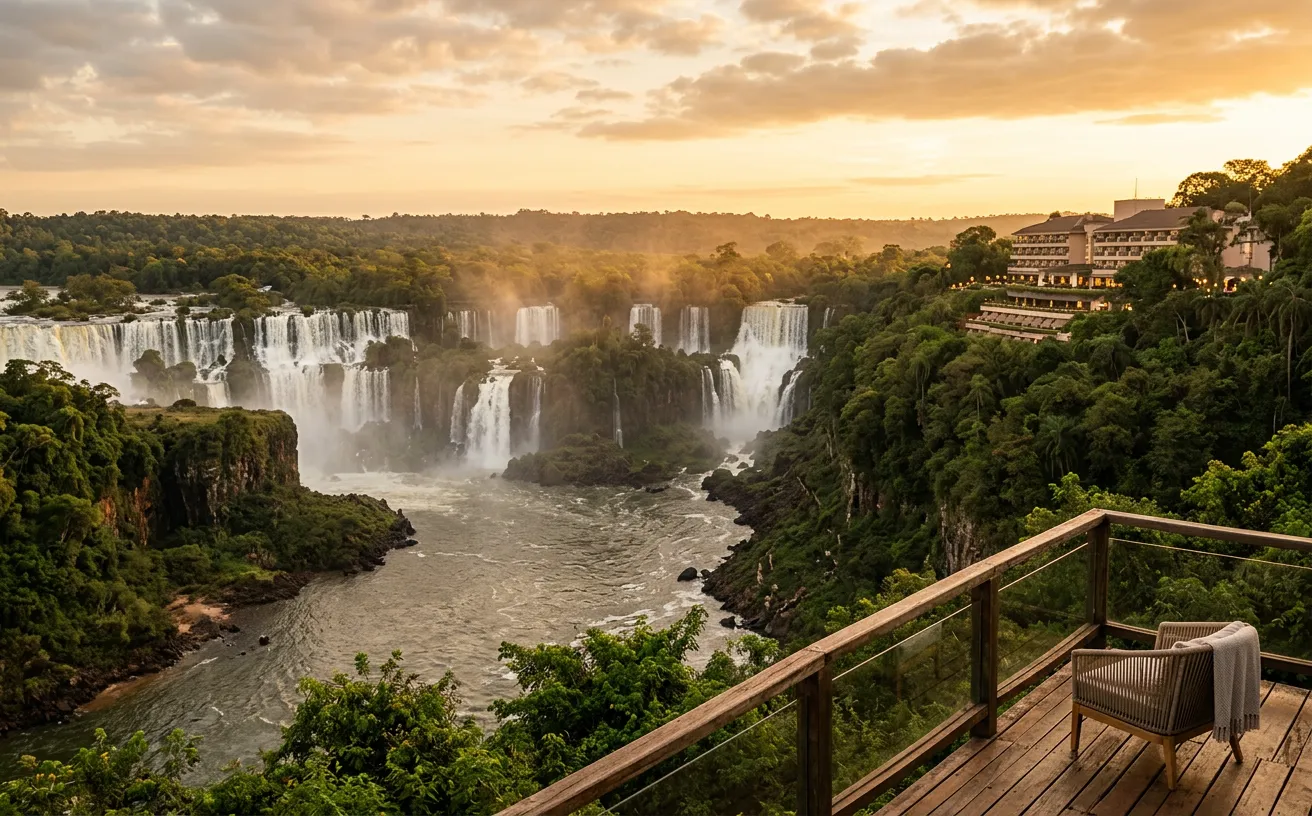
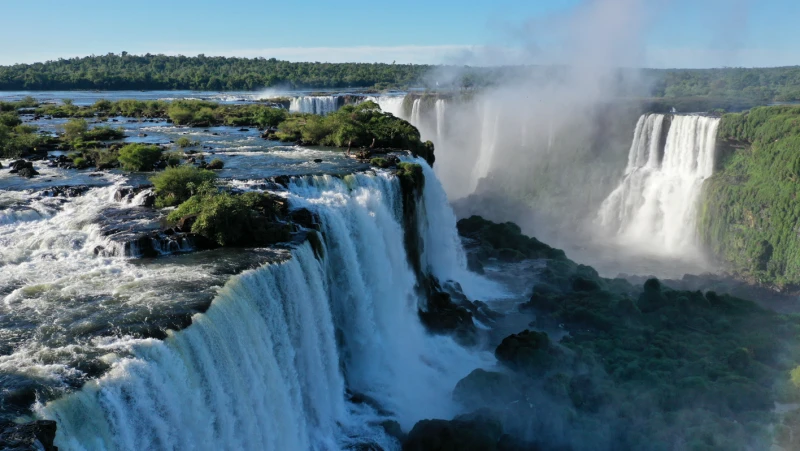
Iguazú Falls straddles the border between Argentina and Brazil, where the Iguazú River drops over some 275 cascades inside two national parks: Iguazú National Park on the Argentine side and Iguaçu National Park on the Brazilian side. Visitors base themselves in Puerto Iguazú, Argentina, along Ruta 12 and in the Selva Iryapú rainforest reserve, or in Foz do Iguaçu, Brazil, along Avenida das Cataratas and in the city centre. Each park also has one hotel inside it.
There is no Chabad house, synagogue, minyan, mikvah, eruv or kosher restaurant on either side of the border, and no Jewish community body publishes services here. Observant travellers bring sealed kosher food from Buenos Aires or São Paulo, or arrange supervised meals before arrival, and plan park visits from Sunday to Friday so Shabbat can be spent at the hotel.
Iguazu Falls · International visitors AR$60,000; Argentine residents AR$25,000; Misiones residents AR$8,000; under 6 free
The Argentine side of Iguazú Falls, a World Heritage rainforest park where walkway circuits run above and below the cascades. The Ecological Rainforest Train, included in the ticket, carries visitors from Estación Central to the Devil's Throat walkway.
Time needed
A full day
Hours
Open daily 8:00 AM–6:00 PM (last entry to the Cataratas Area 4:00 PM)
Tips
Tickets include the Ecological Rainforest Train; first train 8:20 AM, last departure to Garganta 3:30 PM. Open every day including holidays and rainy days. Guided full-moon walks run on set nights.
Pick a place on the map or search an address or hotel to see what is kosher around it.
Frequently asked about Iguazu Falls
Do I need a passport to visit both sides of Iguazú Falls?
Yes. Visiting both parks means crossing between Argentina and Brazil on the Tancredo Neves bridge, with immigration checks on each side every time you cross. Carry your passport and check each country's entry rules for your nationality, and the food import limits, before travelling.
How do I get from the airports to the hotels?
Cataratas del Iguazú airport (IGR) is about 20 km from Puerto Iguazú; taxis, hotel transfers and a Hertz rental desk serve it. Foz do Iguaçu airport (IGU) is on the road to the Brazilian park, with city bus 120, Uber and taxis to the city centre and the hotels on Avenida das Cataratas.
Do I need a car at Iguazú Falls?
Not necessarily. Bus 120 links central Foz do Iguaçu, the airport and the Brazilian park, and Río Uruguay buses run from Puerto Iguazú's terminal to the Argentine park. Private cars cannot enter the Brazilian park. A car or taxi helps for hotels along Ruta 12, Selva Iryapú and Avenida das Cataratas.
Is there kosher food at Iguazú Falls?
No. There is no kosher restaurant, bakery, caterer or certified kosher shop in Puerto Iguazú or Foz do Iguaçu. Bring sealed kosher food from Buenos Aires or São Paulo, which both have large kosher food scenes, or arrange supervised meals before you arrive.
Is there a Chabad house, synagogue or minyan?
No. There is no Chabad house, synagogue or regular minyan on either side of the border, and no Jewish community body publishes services in the area. Buenos Aires and São Paulo both have large communities with daily services.
Is there an eruv at Iguazú Falls?
No. No eruv is published for Puerto Iguazú, Foz do Iguaçu or either national park, so plan to carry nothing on Shabbat outside your hotel.
Is there a mikvah?
No mikvah operates in Puerto Iguazú or Foz do Iguaçu. Buenos Aires and São Paulo both have community mikvaot.
How should I plan Shabbat at Iguazú Falls?
Visit the parks from Sunday to Friday morning and spend Shabbat at your hotel. Park visits rely on buses, a train, electronic tickets and gates, so they are hard to do on Shabbat. Ask your hotel in advance about mechanical keys, a low-floor room and a fridge for your sealed food.
What is open on Shabbat?
Both national parks, the hotels and most attractions are open every day, including Saturday. Since nothing Jewish operates locally, the question is what you can do within the hotel; most travellers rest at the hotel on Shabbat and visit the parks during the week.
Which side should I stay on, and where?
Puerto Iguazú suits visits to the Argentine park, with hotels in town and in the Selva Iryapú rainforest along Ruta 12. Foz do Iguaçu has many hotels along Avenida das Cataratas and in the city centre. Gran Meliá Iguazú and Hotel das Cataratas sit inside the Argentine and Brazilian parks.
Should I visit the Argentine or the Brazilian side?
Both, if time allows. The Argentine side has longer walkway circuits close to the cascades and the Ecological Rainforest Train to the Devil's Throat walkway. The Brazilian side gives the panoramic view of the whole system in about two hours.
How much are the park tickets and when are they open?
The Argentine park opens daily 8:00 AM–6:00 PM and charges international visitors AR$60,000, train included. The Brazilian park admits visitors from 9:00 AM on weekdays and 8:30 AM at weekends, with foreign tickets from R$131 and park buses included.
When is the best time to visit Iguazú Falls?
The falls flow all year. Water is usually highest in the rainy summer from December to February, when some walkways can close, and lowest in winter from June to August; spring and autumn are milder and quieter.