
City overview
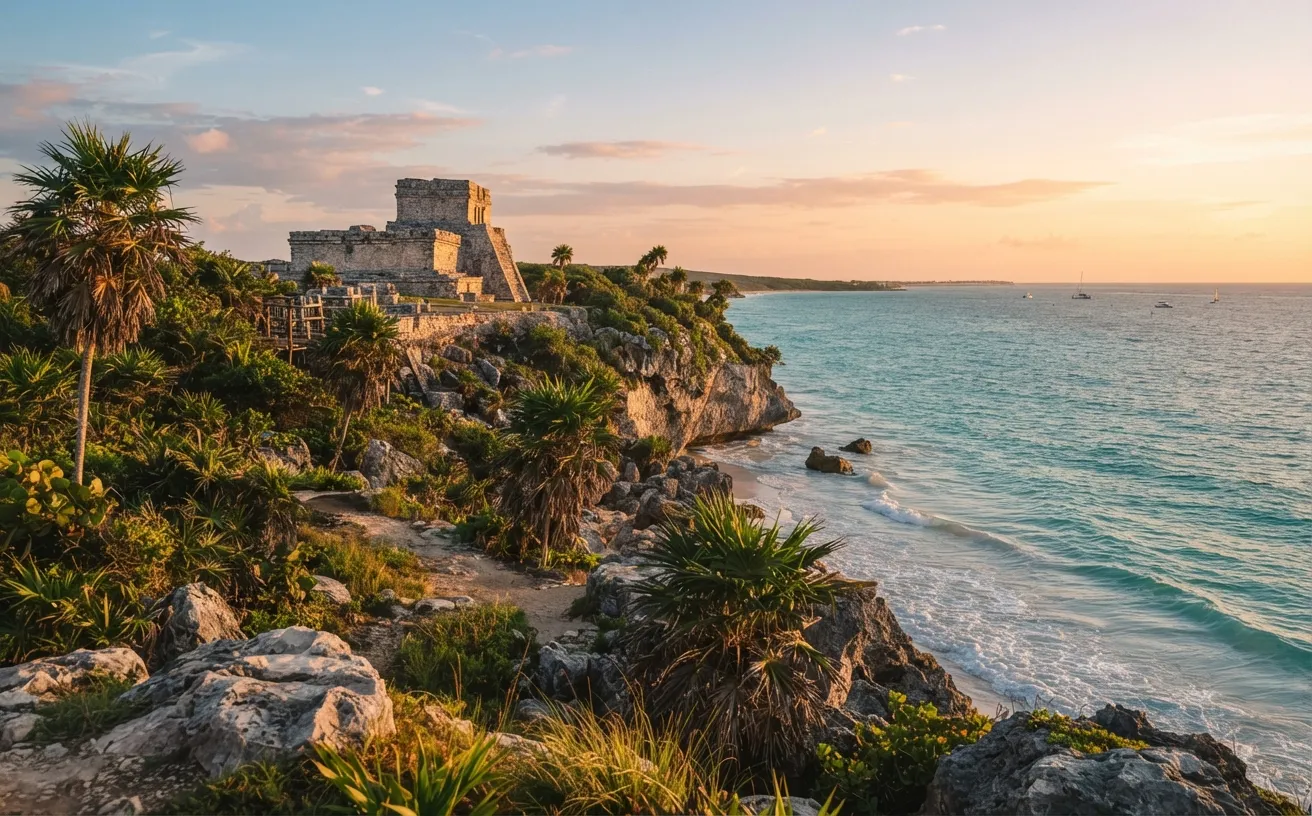
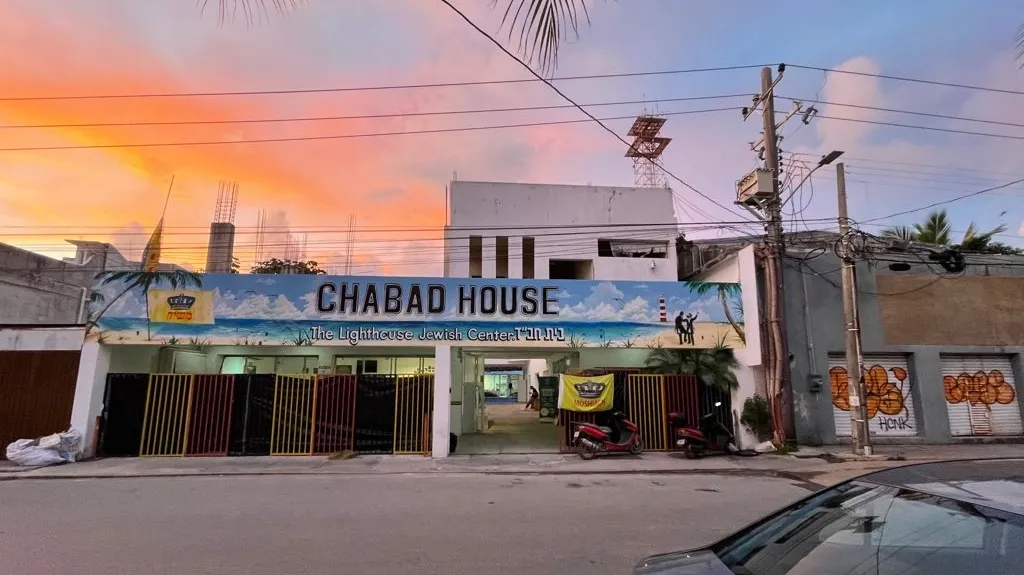
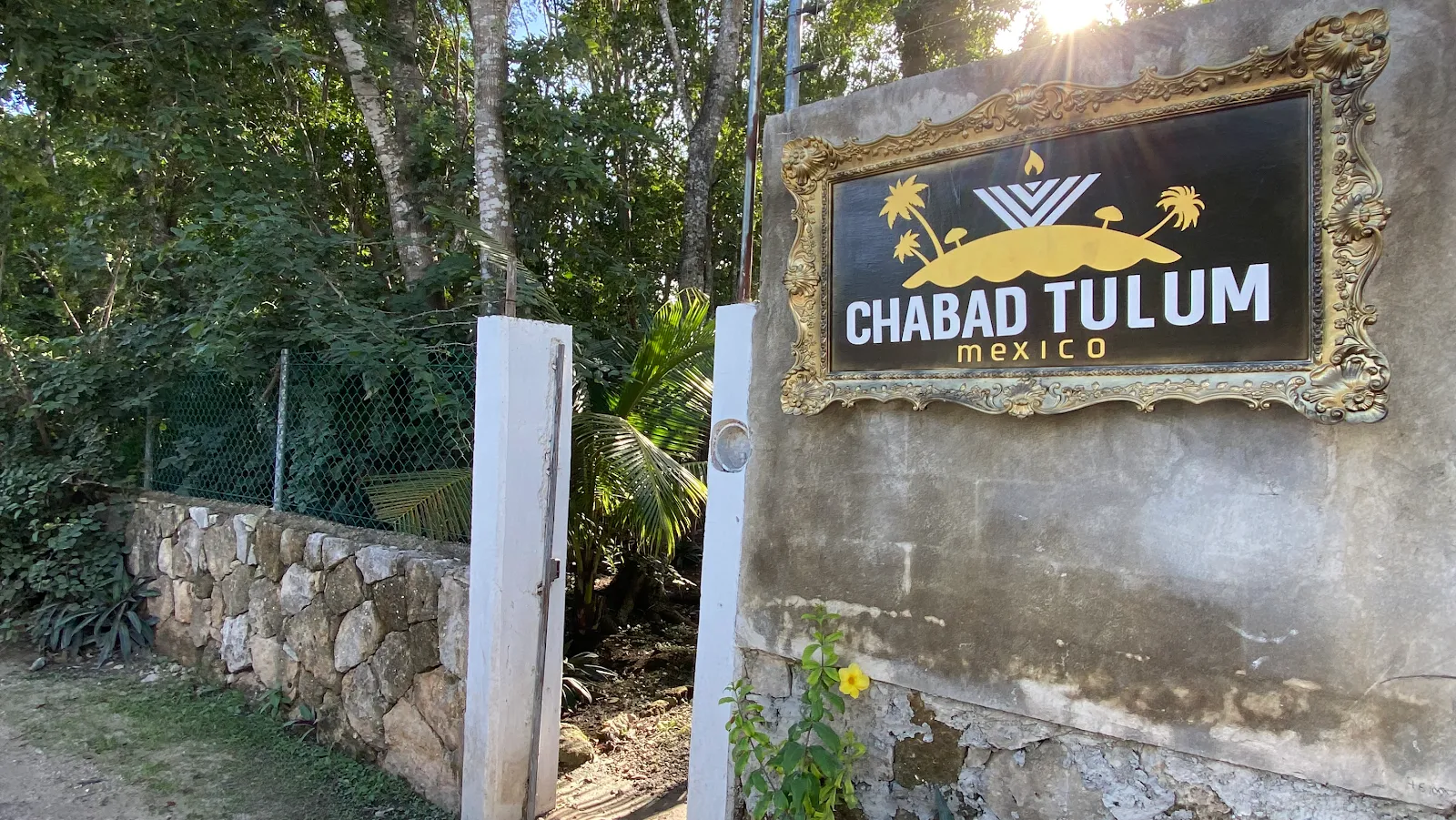
The Riviera Maya runs about 130 kilometres of Caribbean coast from Puerto Morelos south through Playa del Carmen, Mayakoba, Puerto Aventuras and Akumal to Tulum, and packs white sand, jungle cenotes and Maya cities into a single stretch of Highway 307. Playa del Carmen is the heart of it, a walkable beach town built around Quinta Avenida, and it is also where Jewish visitors will find the region's kosher scene. Two Chabad houses operate in Playa del Carmen and a third serves Tulum, between them running a synagogue, a mikvah, Shabbat meals and more than a dozen supervised kosher kitchens, bakeries and shops. It is one of the densest concentrations of kosher food anywhere in Latin America outside Mexico City, and it sits within walking distance of the beach.
Chabad in Riviera Maya
3 Chabad centers
Getting Around
Public transit
Colectivos — shared white vans — are the workhorse of the corridor.
They run Playa del Carmen to Tulum from the Terminal Única de Vans Foráneas on Calle 1 Sur opposite the Chedraui supermarket, stopping on request at Xcaret, Xplor, Puerto Aventuras, the Akumal arch and Chemuyil; Playa to Akumal costs about 45 pesos and takes around 35 minutes. Northbound colectivos to Puerto Morelos and Cancún leave from the same area, with Cancún to Playa around 55 pesos and Cancún to Puerto Morelos around 30 pesos, running roughly 5:00 AM to 11:30 PM. Note that Puerto Morelos colectivos drop at the highway junction, about two kilometres from the pueblo; a local colectivo into town is 10 pesos. Inside Playa del Carmen, combis run Avenida 30 and the surrounding streets for 12 to 15 pesos. ADO runs air-conditioned intercity coaches from the terminals on Quinta Avenida and Calle 12 to Cancún airport, Tulum, Valladolid, Mérida, Chichén Itzá and Bacalar. The Tren Maya now serves the corridor with stations at Cancún Aeropuerto, Puerto Morelos, Playa del Carmen, Tulum and Tulum Aeropuerto; tickets are bought through the official Tren Maya site or at station counters.
Rideshare
Ride-hailing is legal in Quintana Roo but thin on the ground here.
Uber and DiDi both operate in Cancún, but in Playa del Carmen and Tulum drivers are scarce to non-existent in practice, and neither app may pick up at Cancún International Airport. Plan on taxis, which work on fixed zone rates rather than meters — always agree the fare, in pesos, before you get in, and expect to pay less flagging one on the street than taking one from a hotel or mall rank.
Car rental
A rental car is the most practical way to reach the cenotes, Cobá and the quieter beaches, and all the major agencies operate at Cancún and Tulum airports and along Highway 307.
Mexican third-party liability insurance is compulsory and is not covered by most foreign credit cards, so expect it to be added at the counter whatever your card offers. Highway 307 is a fast divided road with frequent topes and retornos, fuel is sold by attendants who should zero the pump in front of you, and parking in central Playa del Carmen is metered and tight.
Airport
Two airports serve the corridor. Cancún International (CUN) is the main gateway, about 55 kilometres and 45 to 60 minutes north of Playa del Carmen, with four terminals and direct flights from across North America, Europe and Latin America; ADO coaches run from the terminals to Playa for around 300 pesos and the Tren Maya has a station at the airport. Tulum International, officially Aeropuerto Internacional Felipe Carrillo Puerto (TQO), opened on 1 December 2023 about 20 kilometres southwest of Tulum town and handled 1.25 million passengers in 2025; eleven airlines including Aeroméxico, American, Delta, United and Air Canada serve it, and a Tren Maya station sits beside the terminal. TQO is the shorter transfer for Tulum and the southern Riviera Maya, CUN for Puerto Morelos, Playa del Carmen and Mayakoba.
Good to know
Best time to visit
December through April brings the driest, mildest weather, with highs in the mid-20s Celsius and little rain, while June to November is hotter, wetter and inside the Atlantic hurricane season.
Insider tips
Kosher travellers should base themselves in central Playa del Carmen: both Chabad houses, the kosher supermarket, the bakery, the butcher and most of the restaurants sit within a few blocks of each other between Avenida 5 and Avenida 20, and nearly everything else in the corridor is a day trip from there. Order Shabbat meals early in the week rather than on arrival, since both Playa centres and Chabad of Tulum work to advance registration. Tap water is not drinkable anywhere in the region and hotels supply bottled or purified water. Bring reef-safe sunscreen — the cenotes and the Puerto Morelos reef park refuse entry with anything else, and most parks make you shower before entering the water. Sargassum seaweed can affect the beaches between roughly April and September; Puerto Morelos, Maroma and the north-facing coves tend to fare better than the open south-facing beaches. Carry pesos in small notes for colectivos, cenotes and beach parking, all of which are cash-only.
Safety & emergency
The Riviera Maya's tourist areas are generally safe and heavily policed, and most visitors have no trouble, but petty theft, ATM skimming and overcharging by unmetered taxis are the common complaints. Agree taxi fares in pesos before getting in, use ATMs inside banks rather than freestanding machines, and stay out of the water when the red or black flag is flying, since rip currents and boat traffic cause more injuries here than crime does. Mexico's nationwide emergency number is 911 and operators in Quintana Roo are bilingual. Anonymous crime reports go to 089, and Guest Assist, the state's 24-hour bilingual tourist assistance line, is 800 277 4780. In Playa del Carmen, public safety and the tourist police are on 984 877 3340, the Red Cross on 984 873 1233 and the fire service on 984 873 0618. In Tulum, public security is 984 871 2055, the Red Cross 984 871 2052 and the fire service 984 871 3732. Ángeles Verdes, the free roadside assistance patrol on federal highways, is 078.
Plug
Type A/B
127V
Currency
Mexican Peso
About Chabad in Riviera Maya
Riviera Maya has 3 Chabad centers.
Kosher map of Riviera Maya
Pick a place on the map or search an address or hotel to see what is kosher around it.
Frequently asked about Riviera Maya
Do I need a visa to visit the Riviera Maya?
Citizens of the United States, Canada, the United Kingdom, the EU, Israel and many other countries do not need a visa for tourism and may stay up to 180 days. Since 2022 the FMM tourist permit has been issued digitally on arrival by air, with its cost already included in the airfare — there is no paper form to fill in and no separate fee unless you enter overland. An immigration officer stamps your passport with the number of days granted, and it is worth checking that number before leaving the booth, since it is not always the full 180.
Can I drink the tap water?
No. Tap water is not potable anywhere in the Riviera Maya. Hotels and rentals supply bottled or purified water, garrafones (20-litre jugs) are sold in every corner shop, and restaurants use purified water and ice as a matter of course. Brushing teeth with tap water is generally fine, but drinking it is not.
What currency is used, and should I pay in pesos or dollars?
The Mexican peso (MXN). Many tourist businesses quote dollars and will accept them, but almost always at a poor rate — paying in pesos is consistently cheaper. Cards are widely accepted in hotels, restaurants and supermarkets, but colectivos, cenotes, beach parking and small shops are cash only, so carry small notes. If a card terminal offers to charge you in your home currency, decline and choose pesos.
How much should I tip?
Ten to fifteen per cent is standard in restaurants, and it is worth checking the bill, since some tourist restaurants add a propina automatically. Twenty to fifty pesos a day for housekeeping and twenty to fifty pesos per bag for porters are normal. Taxi drivers are not tipped as a rule, though rounding up is appreciated, and tour guides and dive masters usually get ten to fifteen per cent of the tour price.
Is there an eruv?
No. Chabad of Playa del Carmen states on its own visitor pages that there is no eruv in Playa del Carmen, and none exists anywhere else along the Riviera Maya. Plan to carry nothing outside a private domain on Shabbat, and bring anything you need to the synagogue before Shabbat begins.
Where do I find kosher food?
Almost all of it is in central Playa del Carmen, in the few blocks between Avenida 5 and Avenida 20. There are meat restaurants, dairy restaurants, a bakery, a butcher and a dedicated kosher supermarket, plus a delivery service that will bring meals and groceries to hotels and villas along the coast. Tulum has one kosher restaurant, at the Chabad house in La Veleta. Outside those two towns there is no kosher dining, so travellers staying in Puerto Morelos, Mayakoba, Puerto Aventuras or Akumal generally order delivery or drive in.
Is there a mikvah?
Yes. Both Chabad houses in Playa del Carmen operate a women's mikvah, and appointments are arranged directly with the centre in advance rather than by walk-in. There is no mikvah in Tulum, Puerto Morelos or elsewhere along the corridor.
Does Uber work in Playa del Carmen and Tulum?
Legally yes, practically no. Quintana Roo changed its mobility law in 2023 to permit ride-hailing, and Uber and DiDi both function in Cancún, but in Playa del Carmen and Tulum there are very few drivers and requests often go unanswered. Neither app is permitted to pick up at Cancún International Airport. Taxis work on fixed zone rates rather than meters, so agree the fare in pesos before getting in.
What is the best way to get from Cancún airport to Playa del Carmen?
ADO runs air-conditioned coaches directly from the airport terminals to Playa del Carmen's downtown terminal roughly every half hour for about 300 pesos, and it is the simplest option with luggage. The Tren Maya also has a station at the airport with services down the corridor. Pre-booked private transfers are the fastest door-to-door option. Colectivos do not serve the airport, and ride-hailing apps cannot pick up there.
Which airport should I fly into?
Cancún International (CUN) for Puerto Morelos, Playa del Carmen and Mayakoba — it is about 45 to 60 minutes from Playa and has by far the most flights. Tulum International, officially Felipe Carrillo Puerto (TQO), opened in December 2023 about 20 kilometres from Tulum town and is the shorter transfer if you are staying in Tulum or the far south, though it has fewer routes.
What are the plugs and voltage?
Mexico uses Type A and Type B plugs at 127 volts, 60 Hz — the same as the United States and Canada, so North American devices work without an adapter. Travellers from Europe, the UK or Israel need both a plug adapter and, for anything not dual-voltage, a converter.
What language is spoken, and will English get me by?
Spanish is the official language, and Yucatec Maya is still widely spoken inland. English is common in hotels, restaurants and tour operations along the coast, and Hebrew is spoken at the Chabad houses and most of the kosher restaurants. Away from the tourist strip — colectivos, small shops, cenote ticket booths — a few words of Spanish go a long way.
What is sargassum, and will it ruin the beach?
Sargassum is a brown seaweed that drifts onto Caribbean beaches, mostly between April and September, in volumes that vary hugely from week to week and beach to beach. Hotels rake their frontage daily and the state publishes a sargassum monitor. Puerto Morelos, Maroma and the sheltered coves at Akumal and Xpu-Ha usually fare better than the open, south-facing beaches, and the cenotes are unaffected entirely.
Do I need to worry about hurricanes?
The Atlantic hurricane season runs from June to November, with the highest risk in September and October. Direct hits are uncommon in any given year, but tropical storms bring heavy rain and closed beaches, and travel insurance covering weather disruption is worth having for trips in those months. Resorts along the corridor have well-rehearsed storm procedures, and the civil protection authorities issue warnings well in advance.
Is it safe to swim in the cenotes?
Yes, in the open swimming cenotes, which have platforms, steps and life jackets, and most require you to shower off sunscreen and insect repellent before entering to protect the water. Cave and cavern diving in the cenote systems is a different matter entirely and requires specific certification and a qualified guide. Most cenotes are cash-only and many close by late afternoon.
All kosher listings in Riviera Maya
Kosher restaurants, bakeries and groceries in Riviera Maya (16)
- Moshe Cube Kosher Restaurant & Grill
Moroccan, Tunisian and Israeli grill · Gonzalo Guerrero, Playa del Carmen
- Platinum Kosher
Mediterranean grill inside Aldea Thai · Gonzalo Guerrero, Playa del Carmen
- Two Smokers Kosher Smokehouse
American-style kosher smokehouse · Gonzalo Guerrero, Playa del Carmen
- Let's Meat Steak House
Kosher steakhouse at the Beit Chabad complex · Centro, Playa del Carmen
Shuls and minyanim in Riviera Maya (3)
- Chabad Lubavitch Jewish Center of Playa del Carmen
Chabad-Lubavitch, Nusach Ari · Centro, Playa del Carmen
- Beit Chabad Playa del Carmen
Chabad-Lubavitch, Nusach Ari · Centro, Playa del Carmen
- Chabad of Tulum — The Ecological Synagogue
Chabad-Lubavitch, Nusach Ari · La Veleta, Tulum
Shabbos meals in Riviera Maya (3)
- Shabbat Meals at Chabad of Playa del Carmen
Friday night dinner and Shabbat lunch at the Chabad house · Centro, Playa del Carmen
- Shabbat and Holiday Meals at Beit Chabad Playa del Carmen
Registered Shabbat and yom tov meals at the visitor centre · Centro, Playa del Carmen
- Shabbat Meals at Chabad of Tulum
Friday night dinner and Shabbat lunch in La Veleta · La Veleta, Tulum
Chabad centers in Riviera Maya (3)
- Chabad Lubavitch Jewish Center of Playa del Carmen
Centro, Playa del Carmen
- Beit Chabad Playa del Carmen
Centro, Playa del Carmen
- Chabad of Tulum
La Veleta, Tulum