
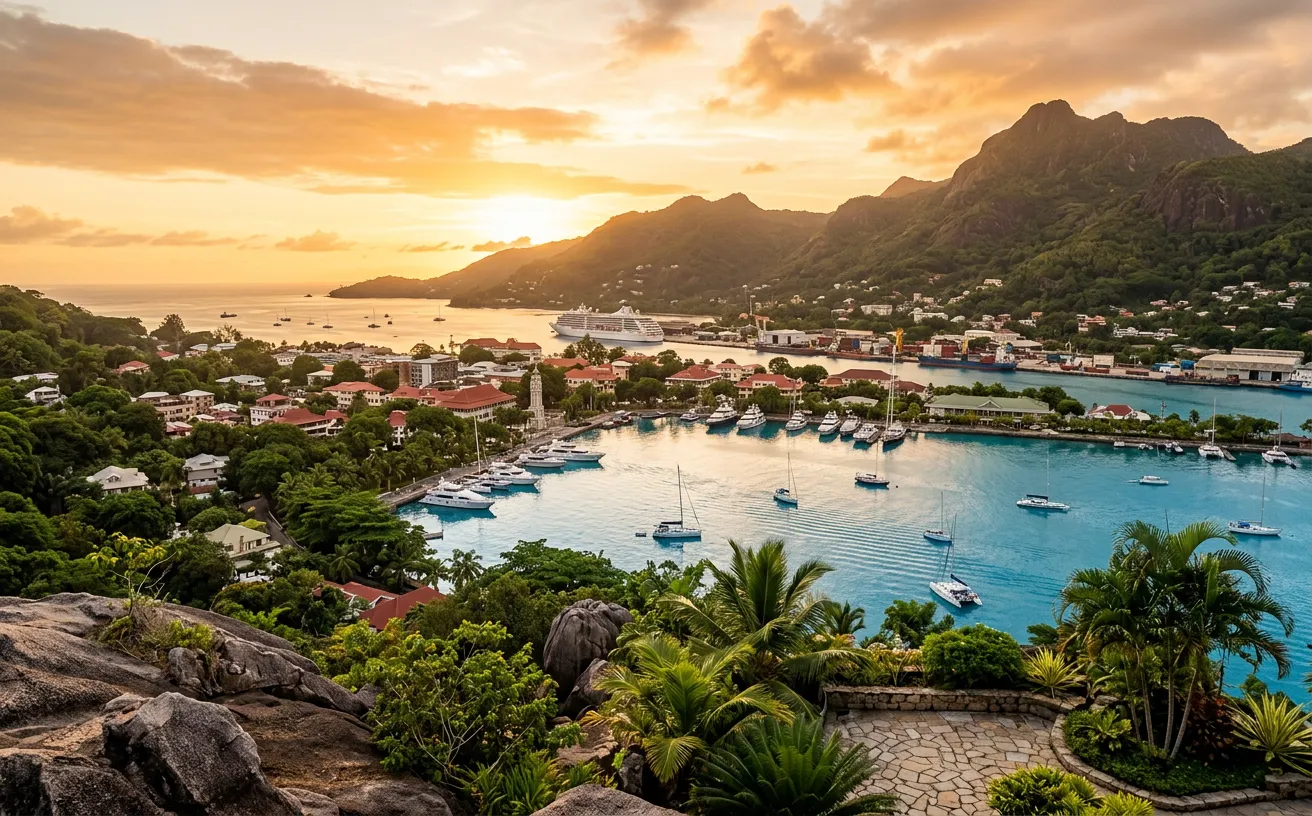
City overview
Seychelles has no resident Jewish community, no synagogue and no kosher restaurant, shop or Chabad house. Visitors who keep kosher bring their own food or arrange meals with their hotel, and supermarkets on Mahé stock imported packaged products that carry kosher certification from their home countries. What Seychelles does offer is an outstanding natural setting for a family holiday: granite islands, marine parks and UNESCO-listed palm forest. This guide lists 33 places to stay across Mahé, Praslin, La Digue and the private islands, and 25 parks, reserves, museums and activity providers, from the Vallée de Mai and Ste Anne Marine Park to Aldabra.
Getting Around
Public transit
Public buses run on Mahé and Praslin and are cheap but slow, with limited evening service.
Inter-island ferries link Mahé, Praslin and La Digue several times a day, and small planes fly between Mahé and Praslin and to the outer-island resorts.
Rideshare
There is no app-based ride-hailing in Seychelles.
Taxis wait at the airport, the Victoria jetty and the larger hotels; agree the fare first or ask your hotel to book one.
Car rental
Local and international rental firms operate at Seychelles International Airport and on Praslin.
Driving is on the left; mountain roads on Mahé are narrow, steep and winding. La Digue has very few cars, and most visitors get around by bicycle.
Airport
Seychelles International Airport (SEZ) is on the east coast of Mahé, about 10 km south of Victoria; most Mahé hotels are 15 to 45 minutes away by road. Praslin has a domestic airport served from Mahé, and the outer-island resorts (Desroches, Platte, Denis, Bird and others) are reached by short charter flights.
Good to know
Best time to visit
April–May and October–November, between the trade-wind seasons, usually bring the calmest seas and clearest water for snorkelling. The north-west monsoon (roughly December to March) is hotter and wetter, and the south-east trades (roughly June to September) bring wind and choppier water on south-east-facing beaches.
Insider tips
Bring your own kosher food or arrange meals with your hotel well in advance; there is no kosher supplier in the country. Several marine parks and reserves charge a separate entry fee on top of the boat trip, and many charge non-residents in rupees. Cash and cards are widely used on Mahé and Praslin.
Safety & emergency
Seychelles is generally safe for visitors. Use hotel safes for passports and valuables, take care on steep trails after rain, and swim only where the sea is calm, as currents can be strong in the trade-wind seasons. In an emergency dial 999.
Plug
Type G
240V
Currency
Seychellois rupee
Kosher map of Seychelles
Pick a place on the map or search an address or hotel to see what is kosher around it.
Frequently asked about Seychelles
Is there kosher food in Seychelles?
There is no kosher restaurant, bakery, butcher or shop in Seychelles, and no kosher catering service. Supermarkets on Mahé stock some imported packaged foods that carry kosher certification from their country of origin, so most observant visitors bring their own food or self-cater.
Is there a synagogue or Chabad house in Seychelles?
No. There is no synagogue, no regular minyan and no Chabad house operating in Seychelles today, so plan to pray privately and bring what you need for Shabbat and festivals.
Can hotels in Seychelles provide kosher meals?
No hotel in Seychelles runs a supervised kosher kitchen, and the islands have no kosher restaurant or Chabad house. Some larger resorts will serve sealed or specially prepared meals when asked well before arrival.
Is there an eruv in Seychelles?
No (no eruv published). Plan Shabbat without carrying outside your hotel room or villa.
Which island is best to stay on?
Mahé has the airport, the capital Victoria and the widest choice of hotels and supermarkets, which matters when you are self-catering. Praslin and La Digue are quieter and closer to the Vallée de Mai, Curieuse and Ile Cocos; the private-island resorts are the most remote.
How do I get between Mahé, Praslin and La Digue?
Ferries run between Mahé, Praslin and La Digue several times a day, and small planes fly between Mahé and Praslin. Book ahead in high season, and allow for the crossing times when planning around Shabbat.
What is the Vallée de Mai?
A UNESCO World Heritage palm forest on Praslin, home to the coco de mer palm and the rare black parrot. It is open daily from 8:30 AM to 4:30 PM, with last entry at 3:30 PM, and charges an entrance fee at the visitor centre.
Do the marine parks charge an entry fee?
Yes. Ste Anne, Port Launay, Baie Ternay and Ile Cocos marine parks charge non-residents Rs200, and Curieuse Rs300, on top of the boat trip. The parks authority sells entry tickets online.
Where can I see giant tortoises?
Giant tortoises live in the National Botanical Garden in Victoria, where visitors can feed them, on Curieuse Island off Praslin, and in huge numbers on remote Aldabra Atoll.
What currency is used in Seychelles?
The Seychellois rupee (SCR). Park and museum fees are usually quoted in rupees, while many tours and hotels price in euros.
What plugs and voltage does Seychelles use?
Seychelles uses Type G (three square-pin) sockets at 240V, the same as the United Kingdom.
When is the best time to visit Seychelles?
April–May and October–November usually bring the calmest seas between the two trade-wind seasons. The islands are warm all year, with more rain from December to March.
Do I need a car in Seychelles?
On Mahé a rental car or taxis make it much easier to reach beaches, trails and supermarkets, as buses are slow. On Praslin a car or bus works, and on La Digue most visitors cycle or walk.
Is there a mikvah in Seychelles?
No mikvah is known to operate in Seychelles, and there is no Jewish community body to arrange one, so plan accordingly before you travel.
What is open on Shabbos?
Without a Jewish community there are no Shabbat services or meals. Hotels, beaches and most parks stay open, so many observant visitors spend Shabbat at their resort and keep any boat trips, paid entries and travel for weekdays.