
City overview
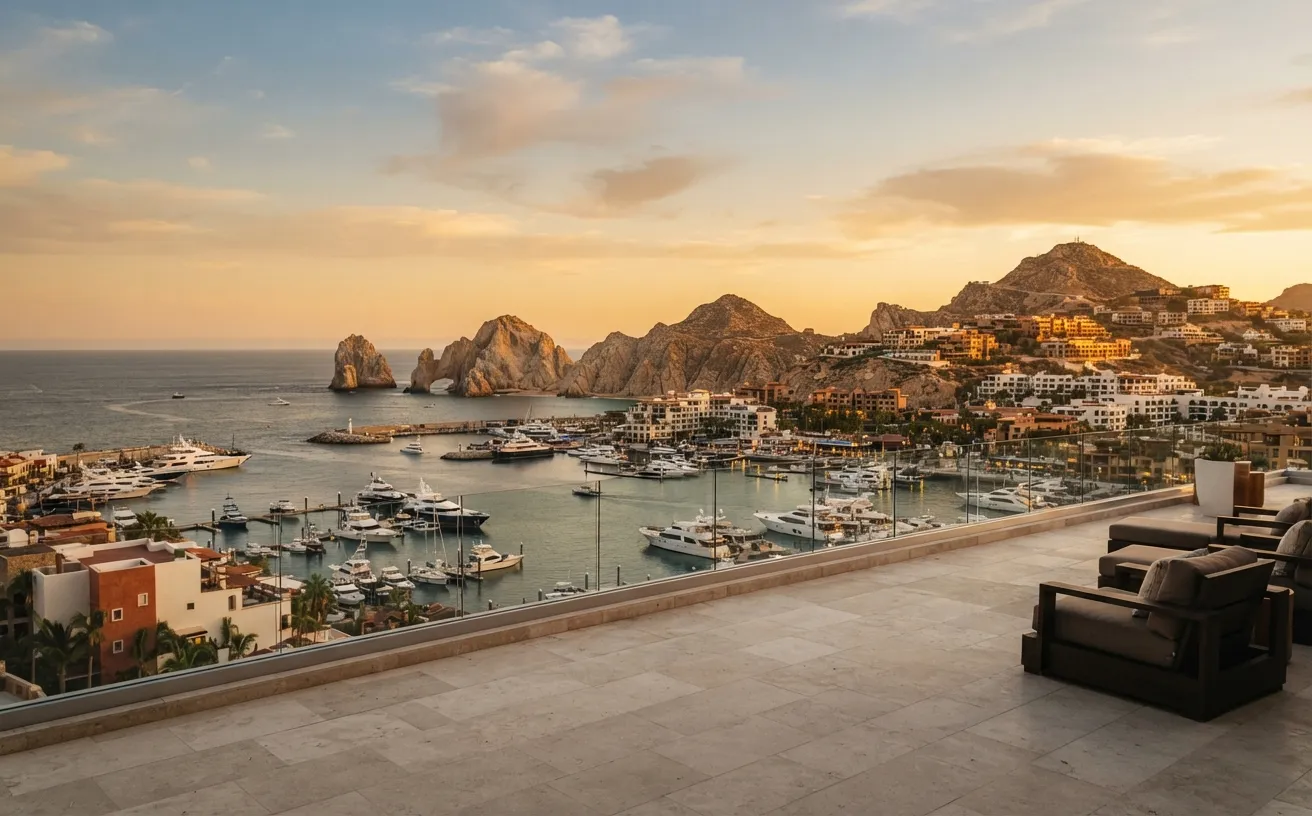
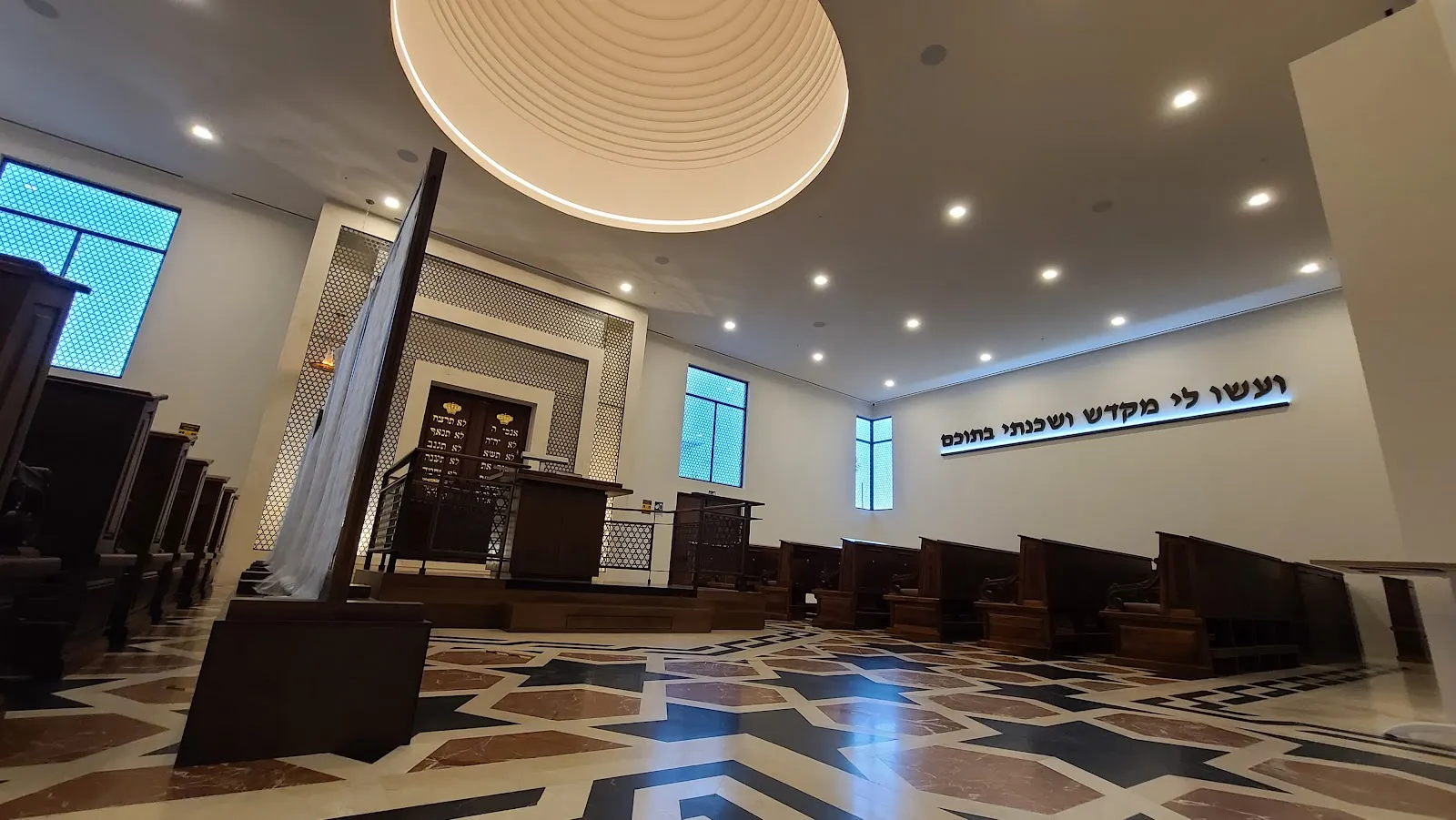
Los Cabos sits at the southern tip of the Baja California peninsula, where the desert runs straight into the sea and the Pacific meets the Sea of Cortez at a granite arch called El Arco. The municipality pairs two very different towns: Cabo San Lucas, built around a superyacht marina and a swimmable town beach, and San Jose del Cabo, a colonial-era mission town with a gallery district and a bird-filled estuary. Between them runs the Tourist Corridor, a twenty-mile stretch of protected coves and resort golf. Jewish life here is young and concentrated: the Cabo Jewish Center opened its permanent building at Chanukah 2021, and its Eliyahu Hanavi Synagogue, glatt kosher restaurant, dairy cafe and mikvah make Cabo San Lucas one of the few beach destinations in Mexico where a kosher-keeping traveller can arrive without shipping in food.
Chabad in Cabo
1 Chabad center
Getting Around
Public transit
Ruta del Desierto runs modern air-conditioned public buses along the Tourist Corridor between Cabo San Lucas and San Jose del Cabo, and local colectivo vans cover the same route more frequently and more cheaply.
Fares are paid in pesos in cash. Service is useful for moving between the two towns but does not reach the East Cape or Todos Santos.
Rideshare
Uber operates legally in both Cabo San Lucas and San Jose del Cabo and along the Corridor, and is generally far cheaper than a street taxi.
It may legally drop off at the airport for departures, but it is prohibited from picking up at the terminal on arrival, which sits in a federal concession zone reserved for licensed transport. DiDi also operates in the area. Street taxis are plentiful but unmetered, so agree the fare in pesos before getting in.
Car rental
A rental car is the practical choice for reaching the East Cape, Cabo Pulmo, Todos Santos or the inland canyons, and the Transpeninsular Highway between the two towns is well maintained.
Mexican liability insurance is compulsory and is not covered by foreign credit-card policies, so expect it to be added at the counter. Fuel is sold by attendants at Pemex stations; watch the pump reset to zero before fuelling.
Airport
Airport: Los Cabos International Airport (SJD). Distance from centre: About 8 miles from San Jose del Cabo, roughly 15 minutes, and about 23 miles from Cabo San Lucas, roughly 40 to 50 minutes depending on Corridor traffic. Los Cabos International is the region's only commercial gateway, operated by Grupo Aeroportuario del Pacifico, with a single two-level terminal building, 19 gates and direct service from most major United States and Canadian hubs as well as Mexico City and Guadalajara. Arrivals pass through immigration and customs before reaching a corridor of timeshare and transport desks, which can be walked straight past. Pre-booked private transfers and licensed shuttles hold the federal permits needed to collect passengers at the terminal; rideshare cars do not, so arrange ground transport before you land. A second field, Cabo San Lucas International (CSL), handles private and charter aviation only.
Good to know
Best time to visit
October through May brings warm, dry days in the mid-70s to mid-80s with almost no rain, while September sits at the peak of both the heat and the hurricane season.
Insider tips
Almost everything a kosher traveller needs sits inside one building. The Cabo Jewish Center on Camino de la Plaza holds the synagogue, the glatt kosher restaurant, the dairy cafe, a kosher meat freezer and guest rooms, and it is a short walk from the marina and from more than a dozen hotels, which matters because nothing else in Los Cabos is walkable to it. Both restaurants close for Shabbos, so Friday afternoon is the moment to collect food. Chabad also koshers private villa and hotel kitchens for a set fee, which is how most larger families eat here. Beyond that: prices at the marina are quoted in dollars and are always better in pesos, so pay in local currency and decline the card terminal's offer to charge you in USD. Tap water is not for drinking, though ice at established restaurants is made from purified water. The Thursday evening Art Walk in San Jose del Cabo runs November through June only. And whale season, roughly mid-December to mid-April, is the single best reason to time a trip.
Safety & emergency
Los Cabos is among the safer destinations in Mexico and the resort areas, marina and gallery district are comfortable to walk after dark, but ordinary precautions apply: use authorised taxis or a pre-booked transfer rather than unmarked cars, keep valuables out of sight on the beach, and treat the Pacific-facing beaches as scenery rather than swimming water. Playa Divorcio, Migrino and most of the open Pacific coast have rip currents strong enough to be lethal, and only beaches with a lifeguard stand and a Blue Flag designation, such as Medano, Chileno, Santa Maria and Palmilla, should be swum. All emergencies (police, fire, ambulance) — 911. Tourist Police — +52 624 143 0573. Police, Cabo San Lucas — +52 624 143 3977. Police, San Jose del Cabo — +52 624 142 0361. Highway Patrol — +52 624 146 0573. Fire Department, Cabo San Lucas — +52 624 143 3577. Fire Department, San Jose del Cabo — +52 624 142 2466. Red Cross — +52 624 144 4420. AmeriMed Hospital — +52 624 105 8500. Blue Medical Net (BMR) Ambulance — +52 624 144 3434. United States Consular Agency — +52 624 143 3566. Canadian Consulate — +52 624 142 4333.
Plug
Type A/B
127V
Currency
Mexican Peso
About Chabad in Cabo
Cabo has 1 Chabad center.
Kosher map of Cabo
Pick a place on the map or search an address or hotel to see what is kosher around it.
Frequently asked about Cabo
Do I need a visa to visit Los Cabos?
Visitors from the United States, Canada, the United Kingdom, the European Union and most of Latin America do not need a visa for tourism and may stay up to 180 days. You will complete a Multiple Migratory Form, now issued electronically at most entry points, and you need a passport valid for the duration of your stay.
Can I drink the tap water?
No. Drink bottled or purified water, which every hotel and rental provides. Ice and washed produce at established restaurants and resorts are made with purified water and are generally fine.
Should I pay in dollars or pesos?
Pesos. Prices at the marina and in tourist areas are often quoted in dollars at an unfavourable house rate. Withdraw pesos from a bank ATM rather than a standalone kiosk, and when a card terminal offers to charge you in dollars, decline and let your own bank convert.
How much should I tip?
Ten to fifteen percent is standard in restaurants, and check the bill first because some add a service charge. Around twenty to fifty pesos per bag for porters, similar per day for housekeeping, and rounding up for taxi drivers is customary.
Is English widely spoken?
Yes, throughout the hotels, restaurants, marina and tour operators. Spanish is the local language and is more useful in San Jose del Cabo's older neighbourhoods, at the public markets and anywhere off the Corridor.
What plugs and voltage are used?
Mexico uses Type A and Type B outlets at 127 volts and 60 hertz, the same as the United States and Canada, so no adapter or converter is needed for North American devices.
When is whale season?
Grey and humpback whales are in the water from roughly mid-December through mid-April, with February and March the most reliable months. They are often visible from the shore at Migrino and from Pacific-facing hotels, and boat trips run daily from both marinas.
Is Uber available?
Yes, in both towns and along the Corridor, and it is usually much cheaper than a street taxi. It can drop you at the airport for a departure but is not permitted to pick you up at the terminal on arrival, so book a licensed transfer for your arrival.
Is Los Cabos safe for tourists?
It is one of Mexico's safer destinations and the resort areas are comfortable to walk in the evening. The real hazard here is the ocean rather than crime: swim only at beaches with lifeguards and Blue Flag status, and stay out of the water entirely on the open Pacific side.
What is the currency and can I use cards?
The Mexican Peso. Cards are accepted almost everywhere in the resort areas, but carry pesos in cash for taxis, beach vendors, small restaurants, park entrance fees and anywhere on the East Cape, where card acceptance and mobile signal both thin out.
All kosher listings in Cabo
Kosher restaurants, bakeries and groceries in Cabo (10)
- Ray's Cabo
Glatt kosher meat restaurant at the Cabo Jewish Center · Cabo San Lucas (Pedregal / Marina)
- The Bagel Spot
Kosher dairy cafe at the Cabo Jewish Center · Cabo San Lucas (Pedregal / Marina)
- Cabo Jewish Center Kosher Meat Freezer
Dedicated kosher meat and poultry retail · Cabo San Lucas (Pedregal / Marina)
- Super Chedraui Selecto Puerto Paraiso
General supermarket carrying kosher-certified products · Cabo San Lucas (Marina)
Shuls and minyanim in Cabo (1)
- Cabo Jewish Center — Eliyahu Hanavi Synagogue
Chabad / Nusach Ari · Cabo San Lucas (Pedregal / Marina)
Shabbos meals in Cabo (2)
- Shabbos Meals at the Cabo Jewish Center
Community Shabbos dinner and lunch hosted by Chabad of Cabo
- Ray's Cabo Shabbos and Holiday Catering
Glatt kosher Shabbos and holiday meals delivered across Los Cabos